Welcome to the SLS page dedicated to providing COVID-19 information for doctors and patients.
For Doctors– Reopening guidelines for practices with scleral lenses are available by clicking the following link. SLS Reopening Guidelines
Below is our recent webinar on Telemedicine and scleral lens management during COVID-19
Patients – see below for frequently asked questions, as well as resources that we hope will help you navigate your eyecare during this uncertain time. Please contact us with any specific questions or requests for education you may have.
COVID-19, aka SARS-CoV-2 is widely known to cause respiratory tract infections but also has presented with various other symptoms [1], such as GI upset [2]. While there has been anecdotal evidence of associated conjunctivitis, it is certainly not a common nor hallmark sign of the disease, and no reports of sight-threatening conjunctivitis (or even severe) have been reported. One study found COVID-19 in the tears of only 1 patient out of 30 COVID-19-positive patients that were tested [3] – and that patient did not have a reported conjunctivitis. Furthermore, there is no evidence that scleral lenses create an increased risk to develop COVID-19, or an associated conjunctivitis. The severity of the respiratory symptoms are the focus of the disease, since it can cause an associated pneumonia or bronchitis and can be life threatening.
No, there is no evidence that suggests wearing any type of contact lenses increases risk of COVID-19 transmission. It is important to remember good lens hygiene though. Scleral lens patients are usually quite good at cleaning their lenses properly, so should not have a problem adjusting to diligent lens hygiene during this time.
No, there is no evidence that suggests wearing any type of contact lenses increases risk of COVID-19 transmission. But remember that COVID-19 can be spread through contact with the eyes (regardless of any contact lens wear), so it is important to keep hands away from the eyes when not directly managing your lenses. For example, it is important to keep your allergies under control to reduce the chance of eye rubbing (see FAQ below), which can increase contact with the eyes and risk the transmission of any infection.
Itchy eyes can be common with patients who wear scleral lenses. Many scleral lens patients experience itchiness of the eyes due to underlying conditions, or the lenses themselves can cause itching. During the COVID-19, we have become acutely aware of the risks of transmission through the eyes. For this reason, and for your own health and comfort, we recommend taking precautions to control your allergies and therefore reduce the chance of eye rubbing.
If you have itching with and without your scleral lenses, it is likely an underlying cause like seasonal allergies, which are currently at a peak in many parts of the world using one or all of the methods below:
There are rare reports of patients who have developed a mild conjunctivitis when they have COVID-19, and they all have been anecdotal (not published in peer-reviewed medical journals). In late January, a doctor in China, developed conjunctivitis while doing an inspection of Wuhan, and then later went on to develop coronavirus [3]. This promted more research into the rate of conjunctivitis associated with COVID-19, which is still ultimately unknown but presumably low. The concern is not the development of the conjunctivitis, since is typically mild with this type of virus, the concern is that findings of the virus in the tears mean that it may be the route of transmission into the rest of the body. There have been no reports of severe or sight-threatening conjunctivits associated with COVID-19, nor any reports at all in scleral lens wearers.
But, remember: try not to touch your eyes, and wash hands frequently to avoid transmission of COVID-19 through your eyes!
Normal scleral lens disinfection steps can be taken during this outbreak. However, we continue to remind patients of the importance of diligent hand washing prior to handling scleral lenses or touching near your eyes. When disinfecting lenses with an approved cleaner, remember some simple tips that will go a long way in protecting your eyes from inflammation and infection of all kinds:
Fortunately, there are no current reported shortages of any scleral lens solutions or products. Solutions and plungers can also be found at online marketplaces such as Amazon or The Dry Eye Shop. Certain products like Menicon’s Unique pH and LacriPure or Bausch and Lomb’s ScleralFil can be purchased from the company web stores.
Please report any known shortages of solutions or accessories to us at sclerallens@gmail.com.
Click here for the peer-reviewed publication by Drs. Lyndon Jones et al. in Contact Lens Anterior Eye, April 2020
Click here for a recent article in Contact Lens Spectrum in which top contact lens experts dispel misinformation about COVID-19 protection and contact lens wear.
A peer-reviewed manuscript in a medical journal showing that out of 30 patients with COVID-19, there was 1 patient where the virus was found in the tear.
Click here for the COVID-19 special edition of the Contact Lens Update, an online educational publication put out by the Center for Ocular Research and Education at the University of Waterloo in Ontario, Canada. We recommend the Featured Article by Karen Walsh which reminds us why hand washing is so important with contact lens wear.
Click here to read Dr. Fadels great article talking about why wearing contact lenses is not a problem during the COVID-19 crisis.
The CDC current recommendations are to practice social distancing of at least 6 feet between people. As of April 4, 2020 an added recommendation is to wear a face covering when outside or around high-risk cohabitants. People are not recommended to use surgical grade face masks, since they should be reserved for health care workers. Home wardrobe items such as scarves and other fabric items can be re-purposed as fashionable face masks. Click here for up-to-date CDC recommendations.
The role of OSHA in the US is to provide recommendations and oversight for workplace safety. They have been working with US companies over the past months to ensure safety for workers at their place of employment. Click here for the current guidelines for workers and COVID-19.
Click on the following links to see updates on COVID-19 from the following Eyecare organizations:
The American Optometric Association
Billing & Coding during COVID-19 (Telemedicine)
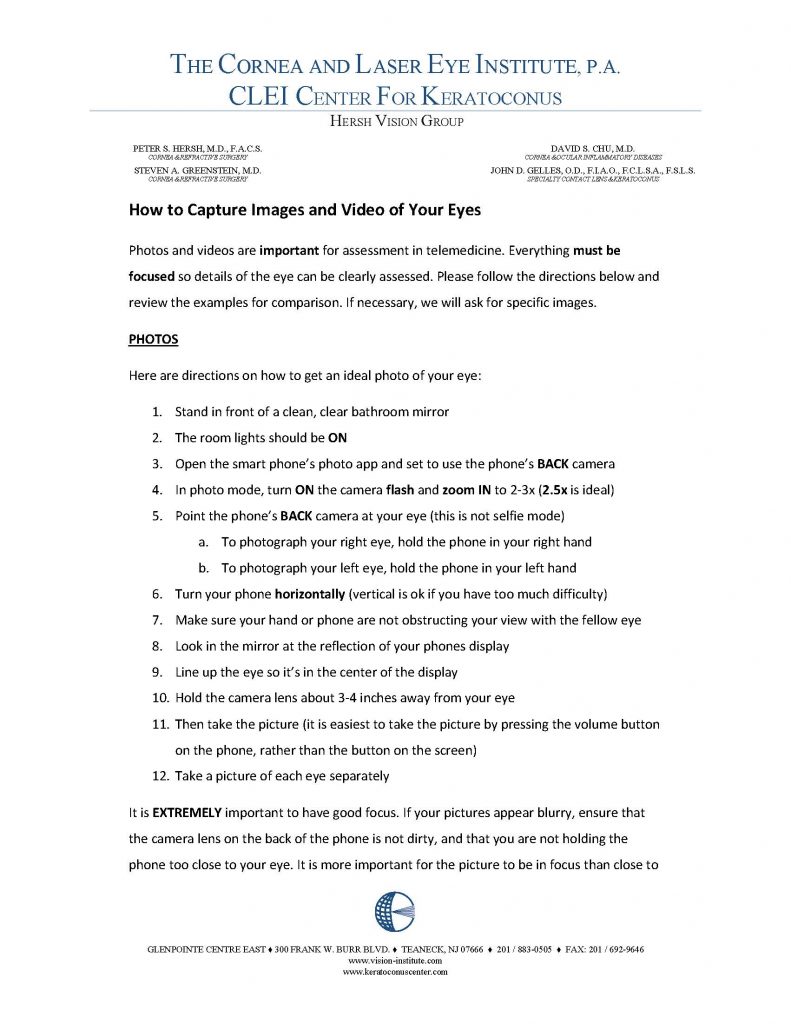
Instructions for Patients: Taking Ocular Photos
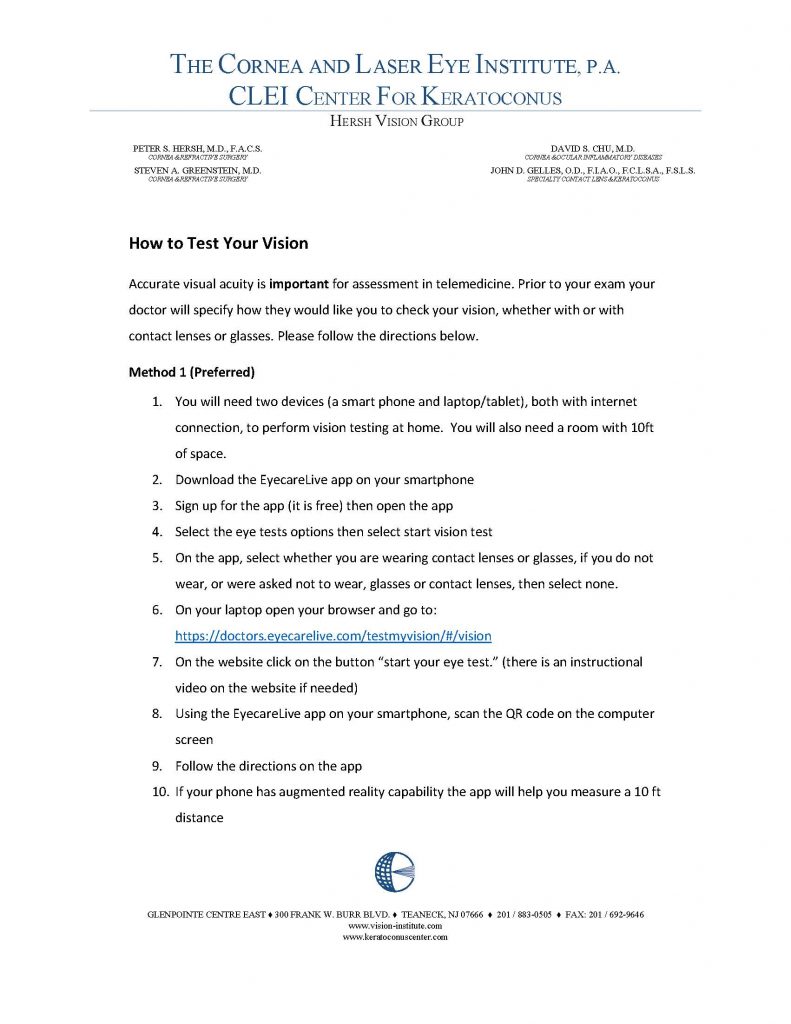
Instructions for Patients: Taking VA at home